Tag Archives: Washington Wild Things

Purists, Relax: Fun Baseball Isn’t Ruining the Game

Can “Fun” Versions of Baseball Such as Banana Ball and Cosmic Baseball Coexist With the Rest of the Baseball World?

Trust me, I know what the baseball purists are going to say.

Until this summer, I was one of them—skeptical, hesitant, and not entirely convinced that a world of “fun” baseball could actually coexist with traditional baseball.

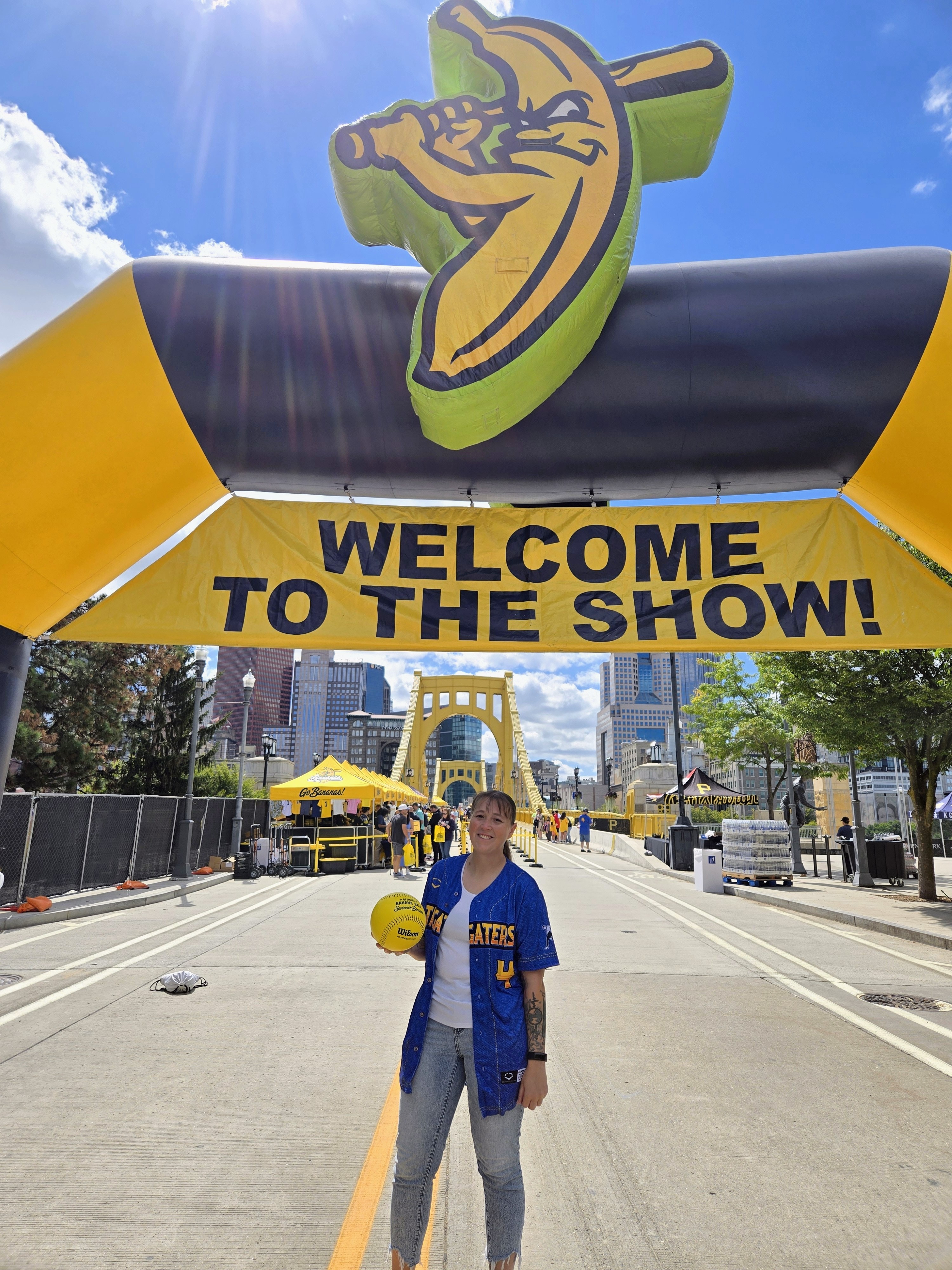
But this season, I experienced the USPBL’s Real Fun, Real Baseball initiative, Cosmic Baseball, and Banana Ball firsthand.

And my mindset has completely changed.
This is 100% an opinion piece. There won’t be stats or hard facts—just my thoughts and feelings on where “fun” baseball belongs. I know many will disagree, but that doesn’t bother me. All I ask is that you hear me out before making your judgment.

We’ve all heard the criticisms about baseball:

  • “Baseball is boring.”
  • “The games are too long.”
  • “Kids aren’t interested anymore.”
  • “We need to speed things up.”

In response, new “fun” versions of baseball have evolved. But with them came new arguments:

  • “Banana Ball isn’t real baseball.”
  • “It’s just a sideshow.”
  • “It’s all scripted.”

The most common misconception is that the Savannah Bananas are “the Harlem Globetrotters of baseball” and won’t last. I understand the comparison—there’s plenty of entertainment—but it’s not the same.

Banana Ball is its own game, with its own rules. The Bananas (along with the Party Animals, Firefighters, and Texas Tailgaters) never claim otherwise. Their motto is Fans First, and they’re chasing what they believe traditional baseball is missing.

Yes, there’s singing, dancing, and trick plays—all of which take hours of practice—but none of the game itself is scripted. Every Banana Ball game happens play by play, live and unscripted. It’s fast-paced, full of energy, and entertaining, while still being a legitimate game at its core.

Comparisons to the Globetrotters aren’t accurate. Their shows are scripted and repetitive, but Banana Ball is unpredictable. And if the Globetrotters can last nearly 100 years, why can’t Banana Ball last?

Right now, it’s the hottest ticket in sports. Games are affordable (if you’re lucky enough to get through in their ticket lottery), and if you can’t attend in person, every game is streamed for free on YouTube—and even picked up by TV networks, including ESPN.
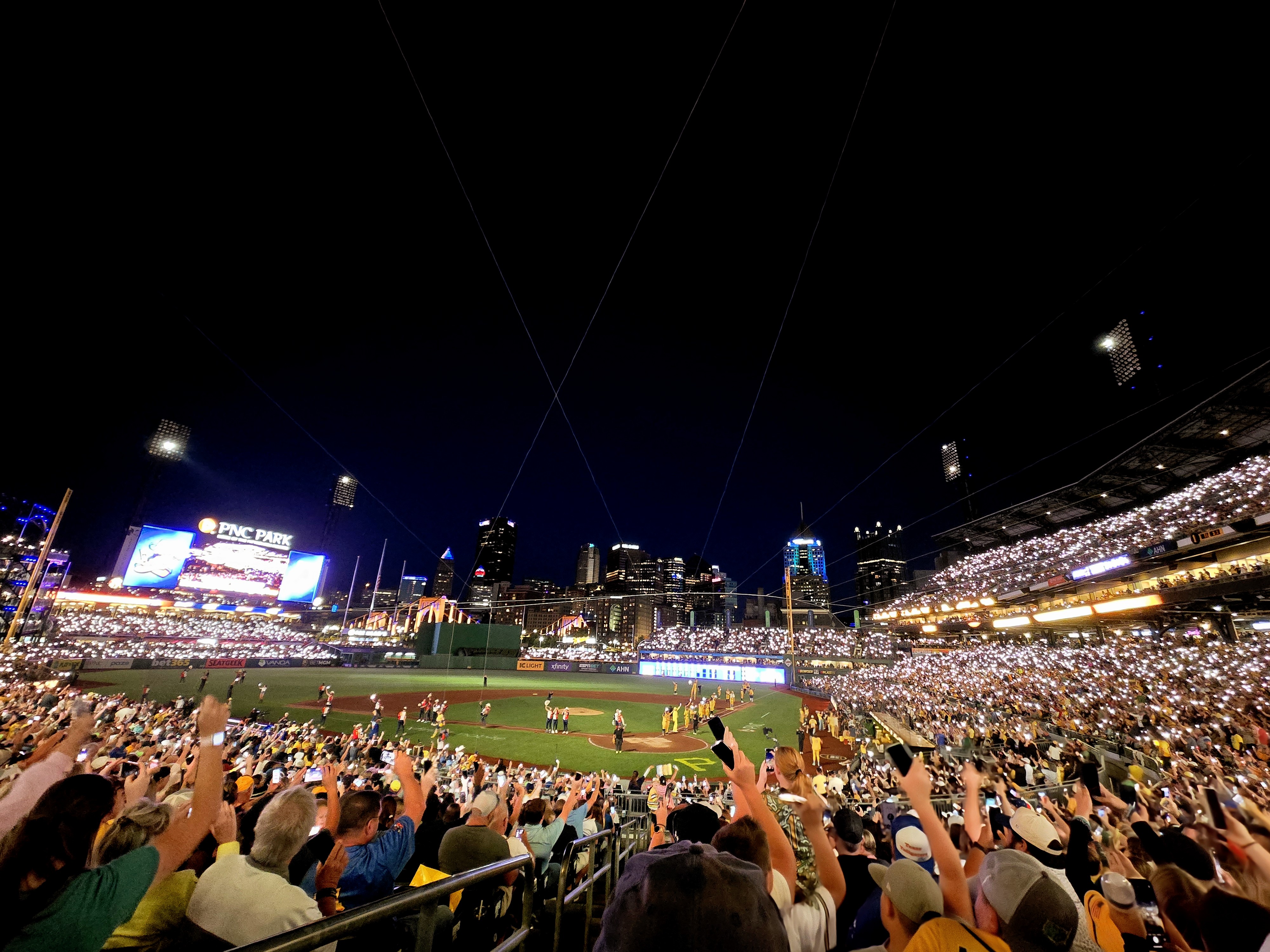
And let me be clear: these players are ATHLETES. They’re not just performers who learn dances and trick plays—they’re also skilled baseball players. Most have college, independent, or minor league experience. In fact, when the Bananas came to Pittsburgh, there were three former Washington Wild Things on the rosters.

Between Banana Ball and Cosmic Baseball, I knew about 10 players from their indy ball careers.

I’ve known these guys for years. I can’t even put into words what it meant to see you guys out there playing the sport you love and enjoying all that this life has to offer you. Because I’ve seen the struggles. I’ve been there through the releases and the signings. I’ve celebrated your successes. And now I get to see it on the biggest stage. I am SO PROUD. It is an honor to follow your journeys and call you my friends. It’s so much more than baseball. What you do on the field is important, but the humans you are and the lives you touch is so much more important.

Cosmic Baseball is new on the scene and shares some similarities with Banana Ball but adds its own twist: bright neon colors under black lights.

Currently featuring two teams—the Cosmic Chili Peppers and the Glomojis—the format mixes tradition and innovation.

The first four innings are played under normal lights but with their own rules (a fan threw out the legitimate first pitch of the game, a young fan drew a reverse Uno card and the players ran to third instead of first after a hit), but the next four are under black lights. Each of those innings ends with a one-on-one home run derby, with runs counting toward the total score. It’s a blast to watch, and there are some serious power hitters involved.

Like the Bananas, Cosmic Baseball begins with a block party. Players mingle with fans, sign autographs, show off hidden talents, and dance. There are concerts (with the players as the band), conga lines, and nonstop energy.

What stood out the most to me? Players refusing to leave the fans. Even when staff tried to send them back to prepare for the game, many stayed outside, making sure every fan got an autograph or picture. That kind of connection makes the experience personal and unforgettable.

This brings me back to the USPBL’s Real Baseball, Real Fun initiative. Unlike Banana Ball or Cosmic Baseball, the USPBL plays a traditional nine-inning game with standard rules. But they infuse fun and interaction throughout:

  • Players greet fans at the gates.
  • They mingle in the stands and kids’ areas.
  • They sign autographs mid-game when possible.
  • Home run celebrations are creative and unique.

The baseball remains competitive and uncompromised, but the players show personality and engage with fans in ways that traditional pro ball often discourages.

And honestly—that’s where I think baseball as a whole needs to go.

We don’t need to price families out of the ballpark.
We don’t need blackout restrictions.
We don’t need players too distant—or too worried—to engage with fans.

There’s room for Banana Ball, Cosmic Baseball, and Real Baseball, Real Fun alongside Major League Baseball and its affiliates.

The game itself doesn’t need to change.
But the focus on fans first shouldn’t stop with the Bananas.

That’s what’s missing from professional baseball.

I don’t think Banana Ball is going to compromise baseball. I don’t think it is a joke or going to make people dislike the actual sport more. I think it is going to elevate it to where it needs to be.

Last night, I saw 10 kids wearing Savannah Bananas gear at the Wild Things game. Those kids saw a Banana Ball game and then wanted to come to an independent game the very next day.

Lightning in a bottle?

A circus?

Or just a family friendly environment that draws people in?

Major League baseball, their affiliates, and indy ball can all take notes.

Ray Hernandez: From the Dugout to Pit Road

Former Atlanta Braves minor leaguer and Frontier League standout, Ray Hernandez, took a unique step to stay in the sports world after his time in baseball came to an end.

Frontier League HR leader in 2021 with the New York Boulders

After posting a career .320 average and setting records for batting average and homeruns at Alabama State, Hernandez was drafted by the Atlanta Braves in the 29th round of the 2018 MLB June Amateur Draft. He spent just two years playing rookie ball in the Braves system before he was a casualty of the minor league pandemic releases.

Not wanting to leave baseball just yet, Hernandez spent three seasons in the Frontier League (Washington and New York) even leading the league in homeruns (23) in 2021 while playing for the New York Boulders.

But, as luck would have it, a connection he made in baseball presented him with a professional sports opportunity that he just couldn’t pass up – becoming a fueler for a NASCAR pit crew.

Now, Hernandez spends his weekends pitting race cars for three teams in the three top series in NASCAR.

Indy Ball Island recently conducted a Q&A with Ray Hernandez to dive deeper into his unique path from professional baseball to professional auto racing.

After your two seasons in the Braves organization, how did you end up in indy ball? 

I had an agent at the time, and he had connection with Frontier League teams. He sent my name around, and the Wild Things were the first team to offer me a contract after I was released by Atlanta. I was eager to sign and continue my career.  

What was your experience like playing indy ball? Any highlights that stand out? Favorite places, games or memories?  

I enjoyed playing in Washington even though it wasn’t a full season. I was happy to be with a good host family and to be around guys that were like me who were trying to re-sign to affiliated ball.

Hernandez with teammate Hector Roa before a game in Washington

My favorite team to play for was New York. I had a lot of success there, and I really enjoyed the set up in Pomona. My favorite team to play against was actually Washington because of how small the field was. Plus it was turf, which I felt helped a lot as an infielder. I loved the trips to Canada. The fans up there were so passionate, and those games just felt bigger to me. I also liked Gateway because the field was tiny. For a power hitter, it was a dream.

I have a lot of memories from Indy Ball. Some of my best seasons were in Indy Ball, and I felt like I was able to be a free player and play my game as opposed to feeling like I had to copy someone else like in affiliated ball. My first season with New York in 2021, I led the league in homeruns and that’s still one of my best accomplishments that I had in my career. I miss baseball every single day.

How did you end up working in NASCAR?

When I was released by Atlanta, it was during COVID. I was released with 35 other players as well as front office personal. One of those front office guys started a recruiting agency because of all the contacts he made in baseball. He also had a connection with Joe Gibbs Racing, and he was the one who got me in contact with Joe Gibbs. I’m thankful for it every day. 

Did you know much about what went into a team and pit crew beforehand? 

So I knew about NASCAR because I’m from Orlando which is very close to Daytona. I watched a few Daytona 500s growing up, and I played a lot of the NASCAR video games when I was younger, so I knew about the teams and how it worked, I just didn’t know I could make a career out of pitting race cars.

What does your week and race weekends look like this season?

We have Mondays off because that’s the day after the races. Tuesday-Thursday, we have a film review of the race from the week before and a preview of what to expect for the following race. We also have practice pit stops and a lift at the facility with our strength coach evey day.

Friday we fly out and work the Craftsman truck race. 

Saturday is the “Xfinity” race and Sunday is the “Cup” race.

You can think about those three races like: Truck – AA, Xfinity- AAA and Sunday as the major leagues if you want to relate it to baseball. The drivers for those three races are all at different levels in their careers, but we are just the pro crew, so we pit all three races. Then we fly back late after Sunday’s race to go back home and do that every week from February through November. It is a very long season. 

Clutch pit stop in the Xfinity series

What aspects have you been able to bring from baseball into your work now? 

I think the number one thing that I bring from baseball to racing is the “turn the page” aspect of baseball. You play so many games in a season and have so many at-bats that you don’t have time to harp on a bad game or at-bat too long. Really, you can’t even enjoy the good games or at-bats because you have another one coming soon after. Racing is very similar. If we have a race where we have bad stops, we don’t have a lot of time to try and adjust before the driver is right back in the stall needing us to lock in and deliver even if we have been bad all race.

What advice would you give an athlete who is looking to make the jump into racing? 

Honestly, I was very lucky to get this opportunity. I knew the right guy at the right time, and I was blessed to have an opening right when I joined. Now I’m moving up the ranks.

The best advice I could give is to move to Charlotte, NC  and try to get with a team, any team, and just work and show them that you’re willing to do whatever it takes to be a member of the squad. Show that you can be an asset. A lot of these things happen by just being at the right place at the right time, and you have to try and set yourself up for a chance somehow.

Anything else you want to add for our readers?

You know, I grew up in East Orlando, and there aren’t a lot of players who made it to the MLB from my area. My high school and college weren’t the best as far as baseball goes, so a part of me is proud of how far I made it in baseball. I wasn’t supposed to get drafted or even play D1 baseball. I just made every situation work in my favor. I struggled when I was with the Braves. They moved me around into positions that I had never played before, and I felt like they were trying to change how I played. I felt Iike it got me there, so why change me?

But I don’t regret anything in my career. I was a great power hitter and had a very strong arm. I would like to think that I was a good teammate, maybe not 100% of the time, but at least when it mattered most. I love baseball. I played it since I was 4 years old, and that’s the only sport I ever played. My goal for as long as I could remember was to make it to the MLB. I fell short of that, but the lessons that I’ve learned are ones that will pass down to my children when I have them. I want to try and show them how to be a better player than I was.

NASCAR isn’t baseball, and I don’t know if I will ever be content with how my career ended, but at least I’m lucky enough to have something I can give 100% in. It’s honestly the closest thing to baseball that I could be doing, and I’m grateful that I have this new career with Joe Gibbs Racing.

Living the dream with Joe Gibbs Racing on pit road