Former Atlanta Braves minor leaguer and Frontier League standout, Ray Hernandez, took a unique step to stay in the sports world after his time in baseball came to an end.
Frontier League HR leader in 2021 with the New York Boulders
After posting a career .320 average and setting records for batting average and homeruns at Alabama State, Hernandez was drafted by the Atlanta Braves in the 29th round of the 2018 MLB June Amateur Draft. He spent just two years playing rookie ball in the Braves system before he was a casualty of the minor league pandemic releases.
Not wanting to leave baseball just yet, Hernandez spent three seasons in the Frontier League (Washington and New York) even leading the league in homeruns (23) in 2021 while playing for the New York Boulders.
But, as luck would have it, a connection he made in baseball presented him with a professional sports opportunity that he just couldn’t pass up – becoming a fueler for a NASCAR pit crew.
Now, Hernandez spends his weekends pitting race cars for three teams in the three top series in NASCAR.
Indy Ball Island recently conducted a Q&A with Ray Hernandez to dive deeper into his unique path from professional baseball to professional auto racing.
After your two seasons in the Braves organization, how did you end up in indy ball?
I had an agent at the time, and he had connection with Frontier League teams. He sent my name around, and the Wild Things were the first team to offer me a contract after I was released by Atlanta. I was eager to sign and continue my career.
What was your experience like playing indy ball? Any highlights that stand out? Favorite places, games or memories?
I enjoyed playing in Washington even though it wasn’t a full season. I was happy to be with a good host family and to be around guys that were like me who were trying to re-sign to affiliated ball.
Hernandez with teammate Hector Roa before a game in Washington
My favorite team to play for was New York. I had a lot of success there, and I really enjoyed the set up in Pomona. My favorite team to play against was actually Washington because of how small the field was. Plus it was turf, which I felt helped a lot as an infielder. I loved the trips to Canada. The fans up there were so passionate, and those games just felt bigger to me. I also liked Gateway because the field was tiny. For a power hitter, it was a dream.
I have a lot of memories from Indy Ball. Some of my best seasons were in Indy Ball, and I felt like I was able to be a free player and play my game as opposed to feeling like I had to copy someone else like in affiliated ball. My first season with New York in 2021, I led the league in homeruns and that’s still one of my best accomplishments that I had in my career. I miss baseball every single day.
How did you end up working in NASCAR?
When I was released by Atlanta, it was during COVID. I was released with 35 other players as well as front office personal. One of those front office guys started a recruiting agency because of all the contacts he made in baseball. He also had a connection with Joe Gibbs Racing, and he was the one who got me in contact with Joe Gibbs. I’m thankful for it every day.
Did you know much about what went into a team and pit crew beforehand?
So I knew about NASCAR because I’m from Orlando which is very close to Daytona. I watched a few Daytona 500s growing up, and I played a lot of the NASCAR video games when I was younger, so I knew about the teams and how it worked, I just didn’t know I could make a career out of pitting race cars.
What does your week and race weekends look like this season?
We have Mondays off because that’s the day after the races. Tuesday-Thursday, we have a film review of the race from the week before and a preview of what to expect for the following race. We also have practice pit stops and a lift at the facility with our strength coach evey day.
Friday we fly out and work the Craftsman truck race.
Saturday is the “Xfinity” race and Sunday is the “Cup” race.
You can think about those three races like: Truck – AA, Xfinity- AAA and Sunday as the major leagues if you want to relate it to baseball. The drivers for those three races are all at different levels in their careers, but we are just the pro crew, so we pit all three races. Then we fly back late after Sunday’s race to go back home and do that every week from February through November. It is a very long season.
Clutch pit stop in the Xfinity series
What aspects have you been able to bring from baseball into your work now?
I think the number one thing that I bring from baseball to racing is the “turn the page” aspect of baseball. You play so many games in a season and have so many at-bats that you don’t have time to harp on a bad game or at-bat too long. Really, you can’t even enjoy the good games or at-bats because you have another one coming soon after. Racing is very similar. If we have a race where we have bad stops, we don’t have a lot of time to try and adjust before the driver is right back in the stall needing us to lock in and deliver even if we have been bad all race.
What advice would you give an athlete who is looking to make the jump into racing?
Honestly, I was very lucky to get this opportunity. I knew the right guy at the right time, and I was blessed to have an opening right when I joined. Now I’m moving up the ranks.
The best advice I could give is to move to Charlotte, NC and try to get with a team, any team, and just work and show them that you’re willing to do whatever it takes to be a member of the squad. Show that you can be an asset. A lot of these things happen by just being at the right place at the right time, and you have to try and set yourself up for a chance somehow.
Anything else you want to add for our readers?
You know, I grew up in East Orlando, and there aren’t a lot of players who made it to the MLB from my area. My high school and college weren’t the best as far as baseball goes, so a part of me is proud of how far I made it in baseball. I wasn’t supposed to get drafted or even play D1 baseball. I just made every situation work in my favor. I struggled when I was with the Braves. They moved me around into positions that I had never played before, and I felt like they were trying to change how I played. I felt Iike it got me there, so why change me?
But I don’t regret anything in my career. I was a great power hitter and had a very strong arm. I would like to think that I was a good teammate, maybe not 100% of the time, but at least when it mattered most. I love baseball. I played it since I was 4 years old, and that’s the only sport I ever played. My goal for as long as I could remember was to make it to the MLB. I fell short of that, but the lessons that I’ve learned are ones that will pass down to my children when I have them. I want to try and show them how to be a better player than I was.
NASCAR isn’t baseball, and I don’t know if I will ever be content with how my career ended, but at least I’m lucky enough to have something I can give 100% in. It’s honestly the closest thing to baseball that I could be doing, and I’m grateful that I have this new career with Joe Gibbs Racing.
Living the dream with Joe Gibbs Racing on pit road
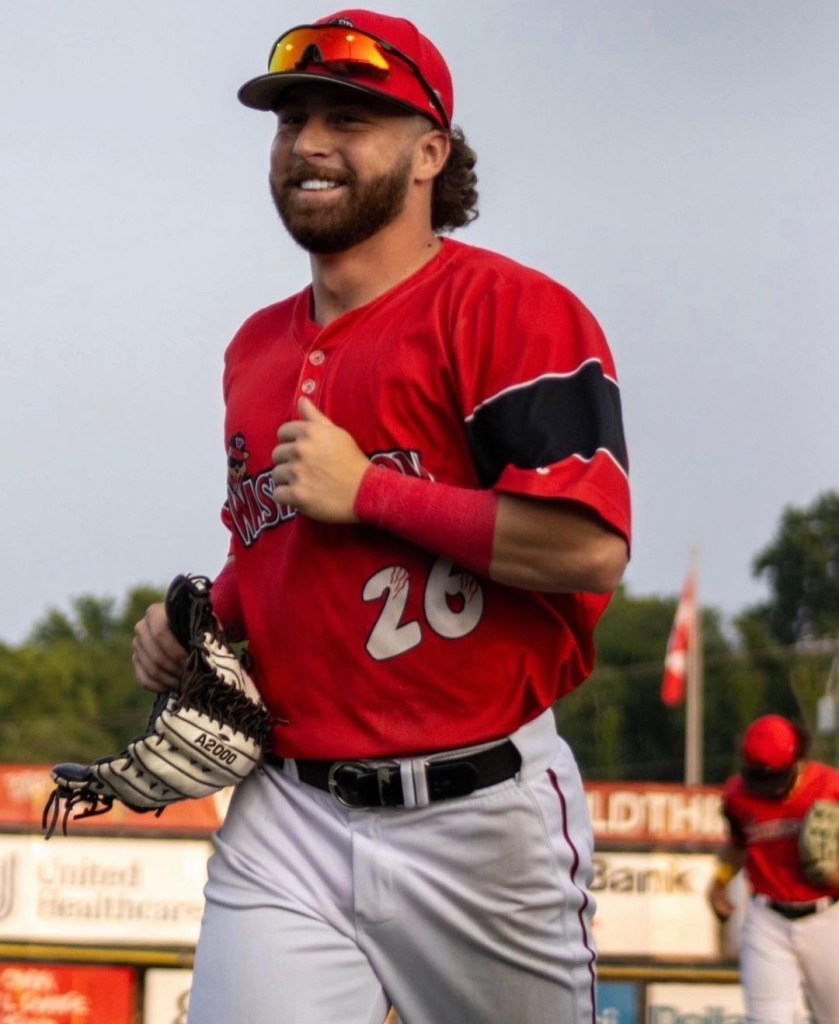
After finishing up an impressive collegiate career, that included time with Spoon River College, Kentucky Wesleyan and the DeLand Suns in the Florida Collegiate Summer League, Robert Chayka was looking to prove he could compete at the next level.
His senior stats certainly showed that he could be an asset. In 54 games with Kentucky Wesleyan, his stats were solid ( .336 BA, .398 OPB, .521 SLG) while scoring 53 runs and hitting 11 doubles, a triple, nine home runs and driving in 43.
Following his senior season, Chayka turned to the California Winter League to seek out an opportunity.
“I chose the CWL because it was the best opportunity for me to showcase my skills,” Chayka explained. “It had good housing, decent food, a nice stadium to play at in a beautiful location, and most importantly the opportunity is there!
“Team tryouts for indy ball just weren’t enough to catch a coach’s attention. I’m not a player where my physical appearance or some radar number is going to get their attention. I needed a place to go where coaches can actually watch me play games.”
The California Winter League offered all of that and more as a step into the world of independent baseball. The jump from college ball to the CWL offered varying levels of competition with a bit more of the cut-throat level of play seen in indy ball.
“You have a mixture of players there, anywhere from pro guys already, all levels of college and older adults trying to live their dream again. You can have a guy throwing 95mph one game and the next 80mph,” Chayka said of the competition.
“In college ball, it’s all about the team and making any sacrifices you can to win. While the CWL, for a lot of people, is their last shot to continue to play baseball, so you have to do what is best for you and not care about anyone else there. It might seem harsh, but that’s the mentality you should have when it might be your only and last opportunity to play.”
Thankfully for Chayka, it wasn’t his last opportunity. After going 10 for 25 with 5 RBI, the Washington Wild Things manager, Tom Vaeth who attends the CWL every year, saw something he liked and signed him to a contract for the Frontier League season.
“The month-long format of the CWL really gives me a chance to truly evaulate players and understand their strengths and how they could fit on my roster,” said Vaeth.
Vaeth’s pick up was a smart move as Chayka had a phenomenal rookie season that had him in the discussion for Rookie of the Year honors by the end of the season.
While playing in 81 games, he slashed .293/.396/.441 including 17 doubles, two triples, six home runs and 43 RBI while stealing 23 bases and drawing 35 walks. In the outfield, he had a .995 fielding percentage with only one error. (Washington Wild Things)
Chayka enjoyed his first season of professional baseball with the Wild Things.
“My first season in pro ball was great! I have a lot to learn still, but overall I enjoyed everything about it. Traveling, the constant games, great teammates, the atmosphere of our home games and food after the games.”
His coaches also enjoyed having him for his rookie campagin. Wild Things Bench Coach, Ryan Whithorn, had glowing praise when asked about Chayka.
“I’m really proud of the way his rookie season went. He came into camp with an opportunity to make the roster after showcasing his abilities in the California Winter League; nothing was guaranteed for him. He didn’t see much action early on but continued to work hard and prepare. Once his time came, he ran with it. Chayka can go get it in the outfield, he runs the bases well, and he swings the bat with intent. He plays with a chip on his shoulder and in Washington we advertise ‘Baseball with an Attitude.’ He’s more than proven he belongs here.”
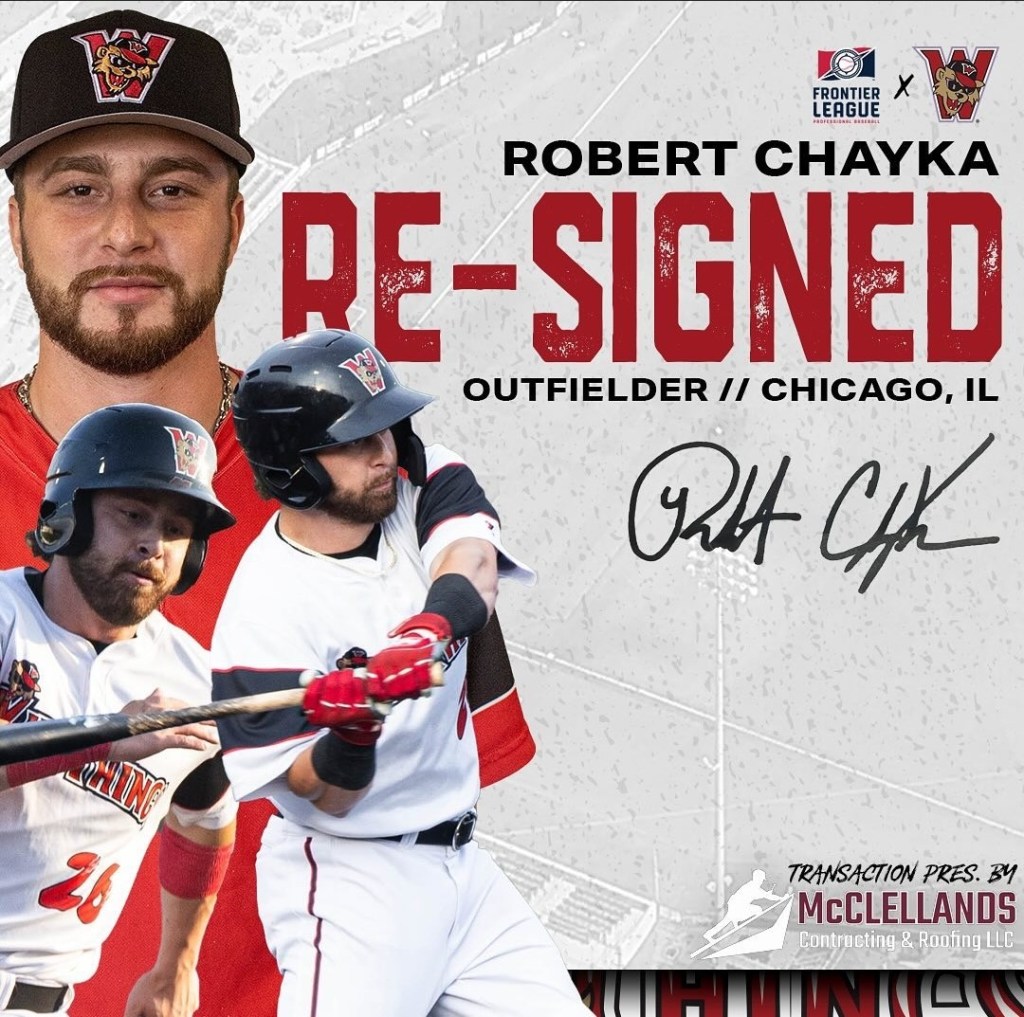
The team agrees that he has certainly proven himself and deserves to be a mainstay on the roster. The Wild Things announced earlier this month that Chayka would be returning for his second season this summer.
“I’m excited about the re-sign, and glad to be going back to Washington.” When asked about his goals going forward, Chayka replied, “The team goal would obviously be to win it all, but individually I want to keep it simple and just do better than last year. I also think getting sponsored by Ghost would be awesome! I only drink their energy drinks every game.”
*Author note* I can 100% confirm that Chayka drinks nothing but Ghost pregame. Let’s get this man a sponsorship!
The Washington Wild Things and Robert Chayka are set to open the season at home Friday, May 10 against the Schaumburg Boomers.
The California Winter League is set to start on January 22nd. For more information on the CWL, check out their website HERE.